New York City is one of the most exciting places in the world to live, but for a growing number of people, the cost of staying is simply no longer worth it. The average one-bedroom apartment in Manhattan now runs well above $3,000 a month, and that number climbs higher every year. Philadelphia sits just 90 minutes away by train and offers the same walkable, culturally rich, East Coast lifestyle at a fraction of the price.

In 2026, relocating to Philadelphia from New York has become one of the most practical decisions a person can make, whether you are renting, buying, or building a life somewhere new. This guide covers everything you need to know, from the housing market and neighborhood choices to what the move itself actually looks like on the ground.
The Housing Math: What Your Money Actually Buys
Nothing illustrates the difference between these two cities better than a side-by-side look at what the same rental budget gets you.
In New York, $2,000 a month might cover a small studio in an outer borough. In Philadelphia, that same budget comfortably rents a two-story rowhouse in a neighborhood you will genuinely enjoy living in, often with a basement and a private outdoor space.
For people considering homeownership, the gap is even more striking. The median home price in Philadelphia hovers around $280,000, compared to well over $750,000 in New York City. First-time buyers who have all but given up on owning property in NYC regularly find that Philadelphia puts that goal back within reach.

Philadelphia vs. New York City: Cost Comparison at a Glance
| Category | New York City | Philadelphia |
|---|---|---|
| 1BR Apartment (avg. rent) | $3,500/mo | $1,600/mo |
| Median Home Price | $750,000+ | $280,000 |
| Monthly Groceries | $600 | $400 |
| Dinner for Two | $100+ | $60 |
| Monthly Transit Pass | $134 | $96 |
| Sales Tax on Clothing | Yes | No |
Beyond rent, the differences carry through into every part of daily life, as the next sections make clear.
Getting Around: Walkability and the Commute to NYC
Built for Pedestrians
William Penn designed Philadelphia on a straightforward grid, and that decision still pays off for residents today. Center City Philadelphia is one of the most walkable urban areas in the entire country. Most daily errands, restaurants, shops, and appointments are reachable on foot or by bike within fifteen to twenty minutes.
For trips that go further, SEPTA (the city’s subway, bus, and trolley network) provides solid coverage across Philadelphia and into the surrounding suburbs. A monthly transit pass costs less than $100, compared to $134 for the NYC subway.
The Hybrid Worker Advantage
One of the strongest arguments for Philadelphia in 2026 is what it offers remote and hybrid workers. Amtrak’s Northeast Regional and Acela services connect Philadelphia’s 30th Street Station to Penn Station in Manhattan in roughly 90 minutes, with trains running throughout the day.
You can keep a New York-based job, commute in two or three times a week, and return each evening to a home that costs half as much. For anyone working on a flexible schedule, this is one of the most efficient setups available anywhere on the East Coast.
Everyday Expenses: Life Is More Affordable Across the Board
The savings in Philadelphia are not limited to housing. The overall cost of living in Philadelphia is roughly 30 to 40 percent lower than New York City, and that gap shows up in meaningful ways every day.
- Dining out is noticeably cheaper. A quality dinner for two in Philly typically costs what a single entree would at a comparable New York restaurant.
- Groceries and household goods run lower across the board, whether you shop at a farmers market or a major chain.
- Pennsylvania does not charge sales tax on clothing or shoes. It sounds minor, but for anyone who spends regularly on clothes, it adds up to a real annual saving.
- Utility costs and internet plans are generally more competitive in Philadelphia than in New York.
The practical effect is that your paycheck simply goes further. Many people who move from New York to Philadelphia report that, for the first time in years, they are able to save money consistently without significantly changing their lifestyle.

Culture, Food, and Community: More Than a Consolation Prize
One of the most persistent misconceptions about Philadelphia is that it offers a smaller, quieter version of what New York has. That is not an accurate picture of the city.
A Restaurant Scene That Stands on Its Own
Philadelphia’s culinary landscape has matured significantly over the past decade. The city is now home to multiple James Beard Award-winning chefs, with standout restaurants in nearly every neighborhood. You will find everything from high-end tasting menus in Rittenhouse Square to exceptional Vietnamese, Ethiopian, and Korean food in Chinatown and South Philly.
The Philly cheesesteak remains a legitimate local institution, but it represents just a small corner of a food scene that has been earning national recognition for years.
Sports Culture Like Nowhere Else
Philadelphians are devoted to their sports teams in a way that is difficult to describe without experiencing it firsthand. The Eagles, Phillies, Flyers, and 76ers each have passionate fan bases, and game days bring the entire city together in a way that feels genuinely communal.
If sports are part of how you connect with a place and its people, Philadelphia will deliver.
Art, History, and Neighborhood Character
Philadelphia has more public murals than any other city in the United States. That statistic says something real about the relationship the city has with its artists and its neighborhoods. From large-scale works in Kensington to gallery-dense blocks in Old City, art is a visible, everyday part of the city’s character.
Beyond that, Philadelphia is a city where neighborhoods feel distinct and lived-in. Each one has its own history, its own regulars, its own sense of identity. That kind of community texture is something a lot of people leave New York specifically to find.

Auto Shipping
Are you looking for the best auto shipping company near you? Give Kerb a call, ask for a free quote and book our top-notch car transportation services.

Packing Services
When the time comes for us to relocate, we seek to find any possible help that will ease the whole process.

Moving Insurance
Are you in need of extra coverage for your valuable belongings? Kerb offers some of the best moving insurance services!
Best Neighborhoods in Philadelphia for People Moving from New York
Choosing the right neighborhood is one of the most important decisions in any relocation. Here is a straightforward guide to help you match your current lifestyle to the right part of the city.
- Fishtown: The closest thing Philadelphia has to Williamsburg. Independent coffee shops, natural wine bars, record stores, and a thriving live music scene. This is where a lot of creative professionals land first.
- Rittenhouse Square: Tree-lined streets, historic architecture, and one of the most beautiful urban parks in the country at its center. A natural fit for people coming from the West Village or Park Slope.
- East Passyunk (South Philly): Dense, walkable, and full of independent restaurants and boutiques. The neighborhood has an Astoria-like feel, with a strong local identity and excellent food options in every direction.
- Northern Liberties (NoLibs): Modern apartments, dog parks, farmers markets, and easy access to both Center City and Fishtown. A solid choice for young professionals.
- Society Hill: One of the best-preserved colonial neighborhoods in the country, with cobblestone streets and historic rowhouses. Quiet, well-connected, and consistently in high demand.
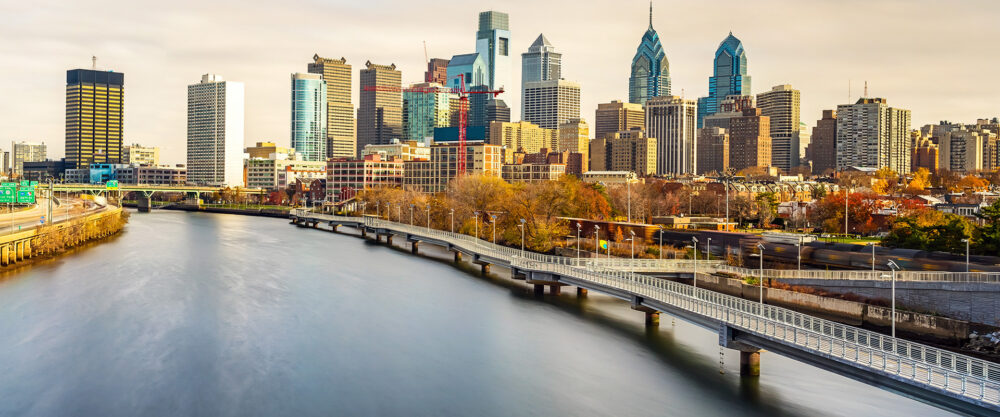
What Moving to Philadelphia Actually Looks Like
The Street Problem Nobody Warns You About
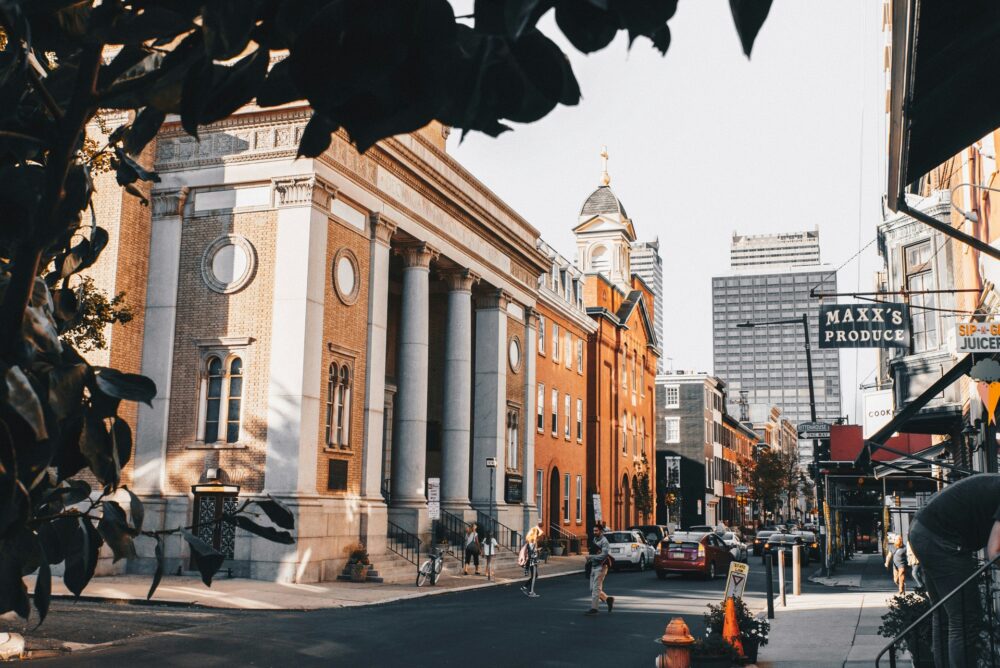
Philadelphia is a genuinely walkable, well-connected city, but it was built in a different era. Large portions of Fishtown, Queen Village, South Philly, and other popular neighborhoods were laid out before cars existed, and the streets reflect that.
Many of the most desirable blocks are served by narrow one-way streets that standard moving trucks cannot navigate. When a standard-size rig tries to work on these blocks, the results are predictable: blocked traffic, frustrated neighbors, the possibility of damage to the truck or nearby vehicles, and a move that takes far longer than it should.
This is not a minor inconvenience. It is one of the most common reasons Philadelphia moves go wrong, especially for people coming from out of state who are unfamiliar with how the streets actually function.
How Kerb Approaches Urban Moves Differently
Kerb was built around exactly this kind of challenge. Rather than trying to force large trucks through streets that were never designed for them, Kerb uses a curb-to-curb logistics model with a fleet of smaller, agile vehicles sized for urban environments.
In practice, this means your move runs smoothly even on the tightest blocks. The truck pulls directly to your door. Nothing gets blocked. The neighbors stay happy. And your belongings do not spend hours being carried by hand from a truck parked three blocks away.
Beyond the vehicles, Kerb handles:
- City permit logistics so you do not have to navigate municipal red tape on your own
- Full and partial packing services, including white-glove handling for fragile or valuable items
- Long-distance coordination for moves coming from New York, New Jersey, Connecticut, and other points along the Northeast Corridor
- Tight-staircase and narrow-hallway expertise for Philadelphia rowhouses, which often have layouts that require specific techniques
Car Shipping to Philadelphia: What to Know Before You Decide
Center City residents who walk or use SEPTA for daily life often manage perfectly well without a car. But having a vehicle does open up weekend trips: the Poconos are about 90 minutes north, the Jersey Shore beaches are even closer, and Lancaster County is less than an hour to the west.
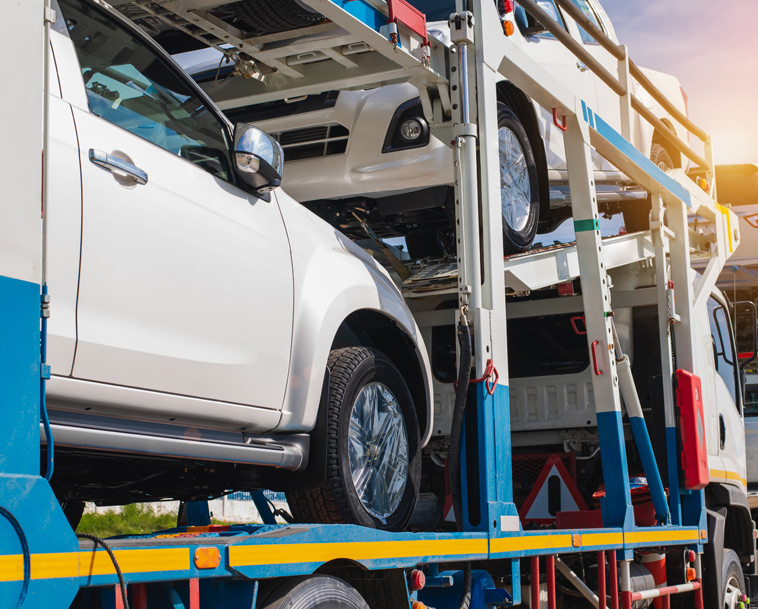
If you are bringing a vehicle from New York, driving it down on moving day while also coordinating a long-distance move is rarely a smooth experience. Kerb offers car shipping to Philadelphia as part of its long-distance moving packages, which means your car arrives safely and you can take the train down comfortably instead of fighting I-95 traffic.
For people moving specialty vehicles, classic cars, or motorcycles, this option is especially worth considering. The vehicle is secured, tracked, and delivered without putting unnecessary miles or stress on something you care about.
Relocation Tips: What to Sort Out Before Moving Day
A few things are worth addressing well in advance of your move date:
- Residential parking permits: Many Philadelphia neighborhoods require a permit to park on the street. Apply as soon as your lease or purchase is finalized.
- Measure your furniture: Rowhouse staircases and hallways have real size limitations. Check your larger pieces (sofas, mattresses, wardrobes) before the truck arrives.
- Declutter before packing: Moving is a natural opportunity to reduce what you own. Fewer items means lower moving costs and a cleaner start in your new home.
- Work with movers who know urban logistics: A national chain that handles suburban moves will not necessarily be equipped for Philadelphia’s specific conditions. Choose a company with direct experience in dense city environments.
- Give yourself a settling-in period: Philadelphia neighborhoods each have their own rhythm. Walk around, try the local spots, and let the city show you what it is before drawing conclusions.
Ready to Make the Move?
Philadelphia is not a compromise. For people who want an urban, walkable, culturally active life without paying New York prices, it is one of the strongest options available anywhere in the country.
The city offers real neighborhoods, genuine community, a serious food and arts scene, and a cost of living that actually allows you to enjoy what you earn. The 90-minute train connection to New York means you do not have to choose between the two cities entirely.
When you are ready to move, Kerb handles the parts that are hardest to get right: navigating narrow streets, coordinating permits, managing the logistics of a long-distance move, and making sure your belongings arrive in exactly the condition they left. Get in touch for a transparent, no-obligation quote and take the first concrete step toward your new city.
FAQ
Is Philadelphia significantly cheaper than New York City?
Yes, across nearly every category. Rent in Philadelphia averages 40 to 50 percent less than in comparable New York neighborhoods, and the savings extend to groceries, dining, utilities, and everyday expenses. For most people, the difference is noticeable within the first month.v
How long does the train commute from Philadelphia to Manhattan take?
Amtrak’s Northeast Regional and Acela trains connect Philadelphia’s 30th Street Station to Moynihan Train Hall in around 90 minutes. Trains run frequently throughout the day, making it a manageable commute for hybrid workers who need to be in the New York office a few times a week.
Do I need a car if I live in Philadelphia?
If you settle in Center City, South Philly, Fishtown, or Northern Liberties, you can get through most of your week without a car. SEPTA covers the majority of daily needs. If you move to a neighborhood further from the core, such as East Falls or Manayunk, having a vehicle becomes more practical.
How do I move large furniture into a Philadelphia rowhouse?
Rowhouses have narrow staircases, tight hallways, and limited clearance in many areas. Measure all large furniture before moving day and flag anything oversized to your movers in advance. Kerb’s teams are trained specifically for Philadelphia’s historic housing stock and know how to handle difficult layouts without damage.
What makes Kerb different from standard long-distance moving companies?
Most national moving companies use large trucks built for highway transport and suburban driveways. Kerb uses a purpose-built fleet of smaller vehicles designed for dense urban streets, combined with local knowledge of Philadelphia’s permit requirements and neighborhood layouts. The result is a move that goes smoothly even on the most challenging blocks.
 Steven Rogers
Apart from sharing Captain America's name, our freelance writer Steven is also a big fan of moving, history, and geography.